
Shinichi Mitsuhashi
MitsubishiDesign lead
Timeline
- 1969
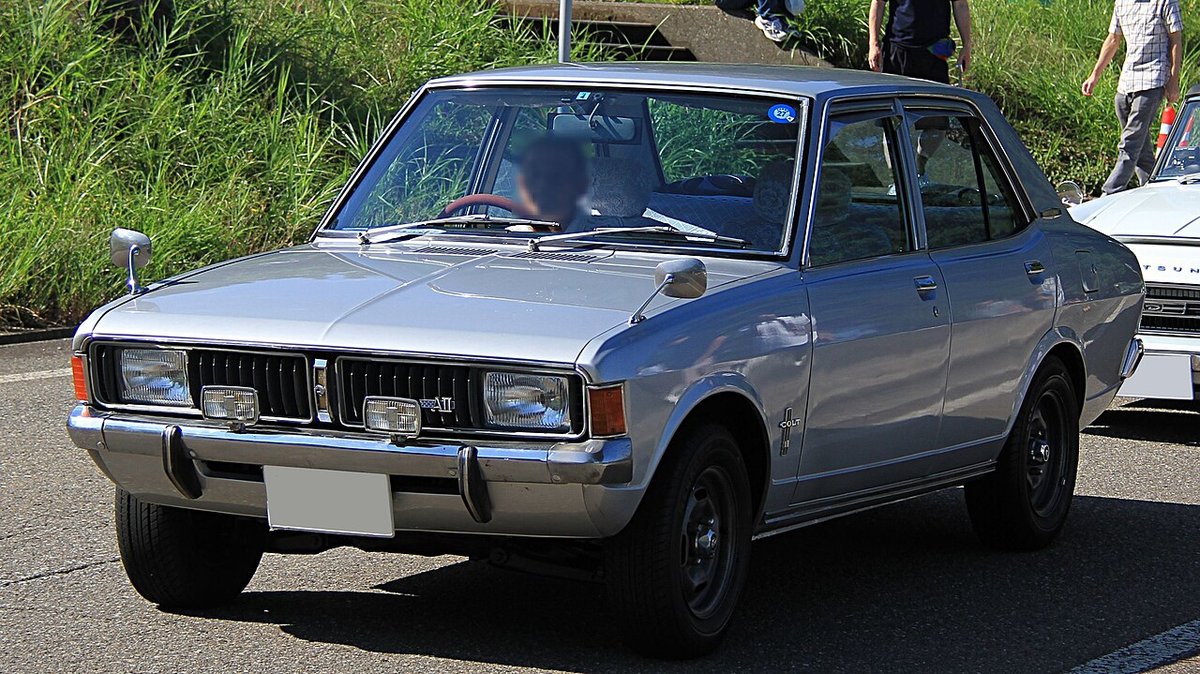 Galant 1st generation
1969–1973Design lead
The ruling that overturned the contest with Giugiaro
When Mitsuhashi returned from his studies in the United States, Managing Director Kubo ordered him to design a new passenger car, saying, "Whatever it takes, I want a car with good style." The plan was to also commission a proposal from Giugiaro in Italy and have it compete with the in-house designers. After meeting Giugiaro himself in Turin, Mitsuhashi felt a strong sense of rivalry and drew a beltline that rose smoothly from the low front and kicked up sharply just ahead of the rear pillar. It was the beginning of what would later be called the wedge shape. At the review held in January, almost all the executives said Giugiaro's proposal should be the basis of the final design. Kubo, however, overturned everyone's opinion, saying it would be enough to take the in-house model as the base and add the good points of the Italian model.
A face of vertical bars and the "Dyna-Wedge Line"
Even after the basic shape was decided, the team kept patiently refining the details. Many front grille proposals were made and examined, and the one finally chosen was based on vertical bars, put forward by Hideaki Yoshizawa, a young designer in his third year at the company. The vertical-bar pattern was carried over to the area around the tail lamps, giving the whole car a sense of unity. The Colt Galant, launched in December, became Mitsubishi's first hit, helped by the catchphrase "Dyna-Wedge Line", which put "dynamic" in front of the designers' term "wedge".
Mitsubishi
- 1976
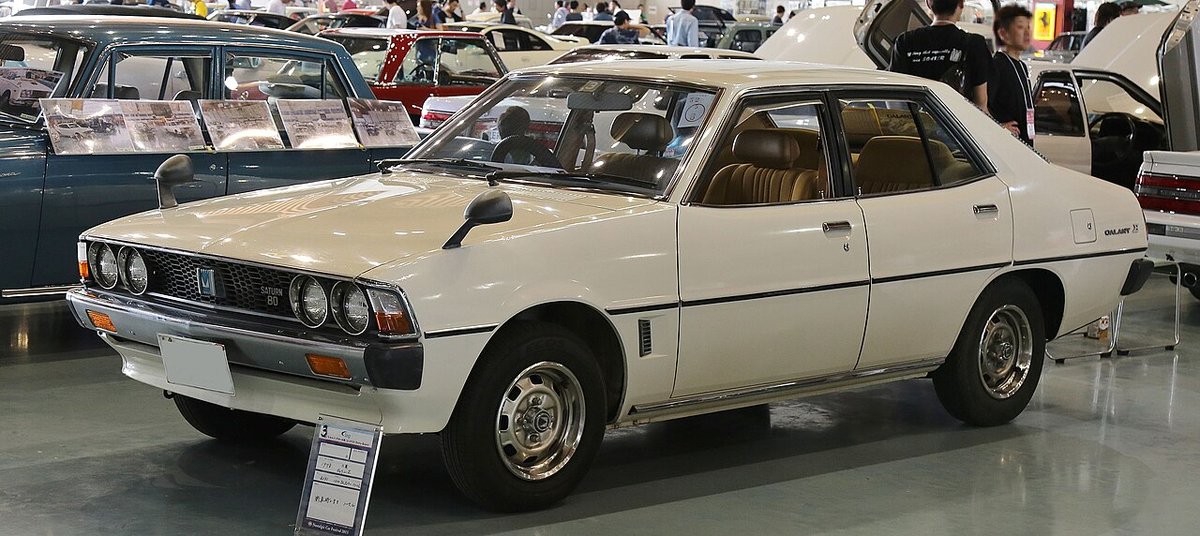 Galant 3rd generation
1976–1980Design lead
"From now on, I decide the design"
In June, Tomio Kubo, who had just become the second president of Mitsubishi Motors, visited the design studio soon after taking office and told the designers of the styling section, "From now on, I decide the design." From the next day, design work on the Galant Sigma began with an all-out effort, and at the first review the direction was set on Mitsuhashi's proposal among six renderings. What Mitsuhashi entrusted to that proposal was carrying on and developing the first-generation Colt Galant.
The image model in the corner
After the work moved to full-size models, hardship continued. The styling section tried one model after another, seven in all, more than ever before, but Kubo's reaction was poor, and every time he came to the studio he berated them: "Is this kind of rubbish all you can make?" So they built an image model that dropped the conditions of the basic dimension drawing to pursue the ideal proportions. One April, Kubo came to the studio for the first time in a while, ignored the model in progress, spotted the model sitting in the corner and said, "This one is good. Why not go ahead with this as the base?" The overall height was lowered by 25 mm to 1,360 mm.
Profile
An in-house designer at Mitsubishi. The 1st-generation Galant (Colt Galant) was finished by an in-house team centred on Mitsuhashi, and the exterior of the 3rd-generation Galant Σ was also the work of an in-house design team he led.
Translated from Japanese sources.
Mitsubishi engineers
- Shinichi YamamuraGalant Coupé FTO
- Hiroaki KamisagoGalant GTO
- Hidetoshi AokiStarion
- Masakatsu SuzukiGTO
- Nobutaka ImadaEclipse
- Hiroaki YoshimatsuLancer Evolution
- Amy HiroshigeEclipse
- Dragan VukadinovićEclipse