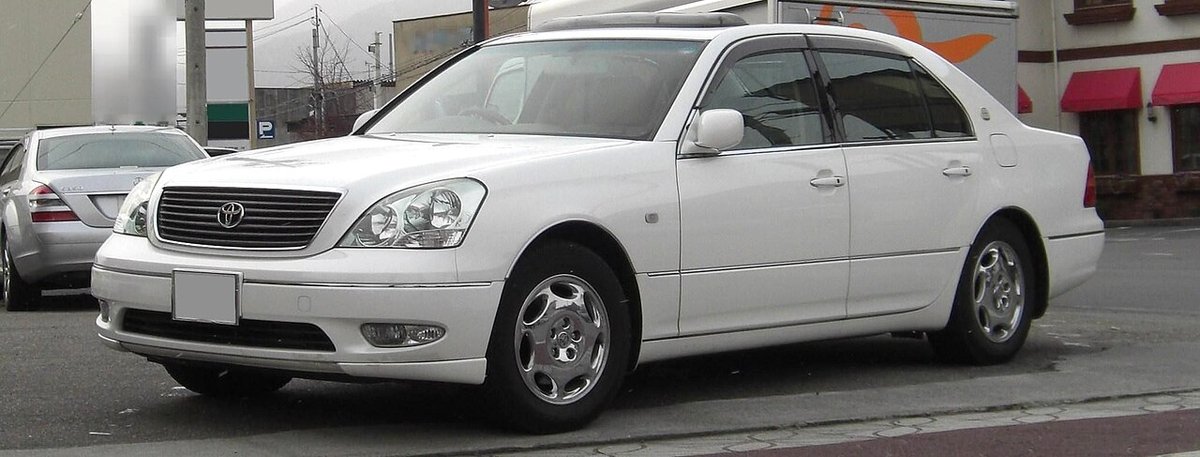
Toyota · Celsior

Toyota Celsior 3rd generation (UCF31/UCF30)

Years
2000–2006
Chassis
UCF31/UCF30
Drivetrain
FR
Toyota Celsior 3rd generation (UCF31/UCF30)

Image: TTTNIS / Public domain

Story

The last model to carry the Celsior name. It switched to a shape with many curved surfaces and achieved a drag coefficient of 0.25, among the best of any production car in the world. The interior took the guest rooms of luxury hotels as its reference.

Stories

01

Learning from a predecessor that was too restrained, and rebuilding the body, interior and technology

When planning the third generation, division executives concluded that the previous redesign had been too restrained. The development team led by chief engineer Yasushi Tanaka chose to rebuild the exterior, interior and technology more thoroughly, and development took four years. The shape, chosen from 16 proposals, was approved, and after repeated testing in a wind tunnel used for Shinkansen development, it achieved a drag coefficient of 0.25 on cars with air suspension.

Chassis

Length 4,995 mmWB 2,925 mm1,470-1,490 mmHeightWidth 1,830 mm
Curb weight
1,780-1,800kg

Production plants

  1. Tahara Plant

    Tahara, Aichi

US import eligibility

Earliest cars
Eligible since August 202525 years after sales began in August 2000
Last cars
Eligible during 203125 years after sales ended in 2006 (month not recorded)

Eligibility depends on each car's month of manufacture on its build plate, not on the sale dates shown here (NHTSA).

Japanese cars reaching 25 years in 2025 →

Engineers

Yasushi Tanaka

Yasushi Tanaka

Head of overall design for the third-generation Celsior (XF30).